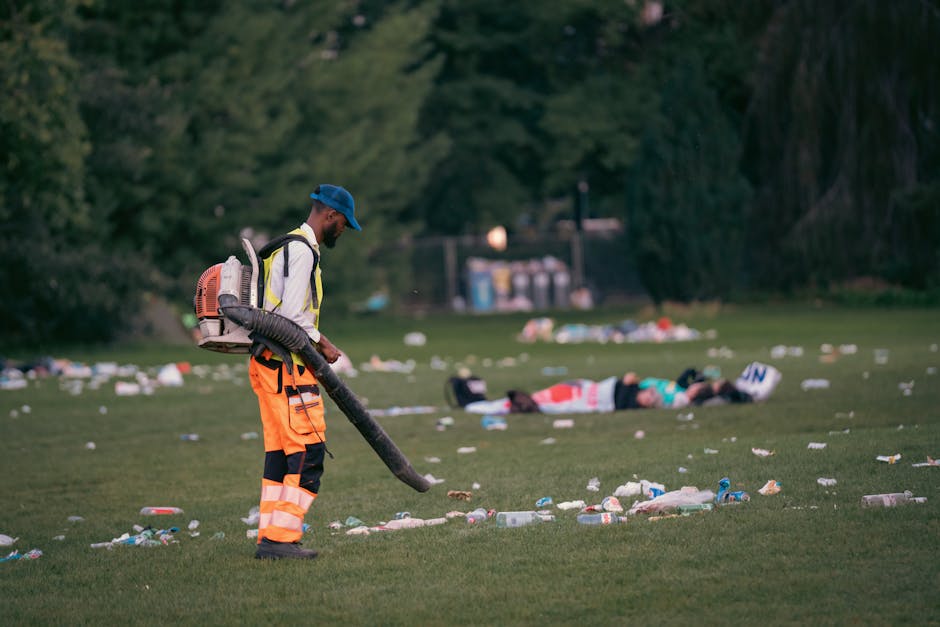
Centre Court event rubbish management for Wimbledon venues: a practical guide to keeping major event spaces clean, safe, and running smoothly
Big event days are brilliant right up until the bins start overflowing. Centre Court event rubbish management for Wimbledon venues is about far more than putting out a few sacks and hoping for the best. It is the quiet, disciplined work that keeps walkways clear, food areas tidy, back-of-house spaces safe, and the whole venue feeling organised from first arrival to final sweep. If you have ever watched a busy hospitality area after a packed interval, you will know the mess builds fast. Cups, napkins, food packaging, cardboard, broken bits of signage, general litter. It piles up before anyone quite notices.
This guide breaks down how venue rubbish management works in practice, why it matters, what to plan for, and how to avoid the common mistakes that cause delays, complaints, and unnecessary stress. Whether you are coordinating event operations, managing a venue team, or simply trying to get a better handle on Wimbledon event waste, the aim here is simple: make it manageable, efficient, and compliant without overcomplicating it.
Table of Contents
- Why Centre Court event rubbish management for Wimbledon venues Matters
- How Centre Court event rubbish management for Wimbledon venues Works
- Key Benefits and Practical Advantages
- Who This Is For and When It Makes Sense
- Step-by-Step Guidance
- Expert Tips for Better Results
- Common Mistakes to Avoid
- Tools, Resources and Recommendations
- Law, Compliance, Standards, or Best Practice
- Options, Methods, or Comparison Table
- Case Study or Real-World Example
- Practical Checklist
- Conclusion
- Frequently Asked Questions
Why Centre Court event rubbish management for Wimbledon venues Matters
At a venue like Centre Court, rubbish is not just an appearance issue. It affects safety, speed, staff workload, guest experience, and the way the entire event feels. A single missed collection can become a bottleneck near catering, a slip hazard on a stairway, or a messy pile in a loading zone that slows down every subsequent movement. That is the unglamorous truth of live events: waste is operational, not cosmetic.
Wimbledon venues also tend to have a very particular pressure profile. Crowd intensity rises and falls quickly. Peaks can happen all at once, especially before play starts, during breaks, and at the close of a session. Waste volumes are therefore uneven. One minute a space looks calm; the next, a service corridor is full of trays, bottles, and cardboard from replenishment. If the collection plan is too loose, staff end up firefighting instead of managing.
Good rubbish management matters because it helps the venue stay presentable without interrupting the event rhythm. It supports hygiene in food and beverage areas, reduces odours, lowers pest risk, and keeps the back-of-house flow moving. It also helps with duty of care. That matters, and not in a theoretical way. People get tired, hurried, and distracted during major events. Clear waste systems reduce one more thing that can go wrong.
Practical takeaway: the best event waste system is the one guests barely notice. If people are commenting on bins, spillages, or overflowing bags, the process is already behind.
For venues in Wimbledon, the challenge is not finding somewhere to put rubbish. It is designing a system that can cope with bursts, separation requirements, access restrictions, and the need to work tidily around high footfall areas. Done well, it becomes one of those background systems that quietly make the event feel effortless.
For broader site and business operations, many venue teams also look at the same operational discipline used in business waste removal and wider waste removal arrangements, because event waste rarely fits into one neat category.
How Centre Court event rubbish management for Wimbledon venues Works
In practical terms, event rubbish management is a structured flow: prevent as much waste as possible from building up in the wrong place, separate materials where sensible, collect at the right time, move waste discreetly through agreed routes, and clear it off site without causing disruption. It sounds simple. The reality is a bit more layered, because live events are messy and changeable.
A solid system usually starts well before the event opens. Teams identify waste streams, likely peak periods, storage points, collection routes, and who is responsible at each stage. Once the crowd arrives, the plan has to be flexible. For example, a catering area may need a fast turnaround after a rush, while a hospitality box may produce more mixed rubbish but in smaller quantities. Different spaces, different rhythms.
In a Wimbledon setting, the process often includes:
- pre-event site checks and waste point placement
- bin zoning for front-of-house and back-of-house areas
- scheduled collections during quieter windows
- overflow monitoring during peak guest movement
- segregation of recyclable and general waste where feasible
- safe movement to temporary holding points or loading areas
- final post-event clearance and sweep-down
It is worth saying that no two events behave exactly the same. A sunny day with long queues outside food outlets creates a different waste pattern from a cooler, shorter session with more indoor movement. You notice these things quickly once you have managed a few event days. The smell of warm food packaging, the sound of bins closing, the sudden rush when play ends. It all adds up.
The best teams build redundancy into the plan. If one bin station fills faster than expected, there should be an easy way to service it without dragging waste through guest-facing areas. If one collection route becomes blocked, there should be an alternative. If not, people start improvising. And improvisation is where mistakes creep in.
Where waste includes bulky materials from staging, temporary signage, or fit-out changes, event teams may also need support similar to builders waste clearance, especially during set-up and dismantling phases.
Key Benefits and Practical Advantages
Strong rubbish management is not about tidiness for its own sake. It creates real operational advantages that make event days easier to run. A clean venue moves better, feels calmer, and usually runs with fewer last-minute surprises. To be fair, that alone is worth a lot when the clock is tight.
1. Better guest experience
Visitors rarely remember a perfectly placed bin. They do remember sticky floors, full waste stations, or food packaging blowing into walkways. Clean shared spaces help the event feel premium and well cared for. That matters at Wimbledon venues, where presentation is part of the overall experience.
2. Safer movement around the venue
Overflowing rubbish creates trip hazards and can obstruct staff movement, especially in narrow corridors and service areas. Efficient collection keeps routes open and reduces the chance of slips, spills, and awkward collisions. If you have ever carried a full tray past a loose stack of cardboard, you will know exactly how quickly that becomes annoying.
3. Better back-of-house efficiency
When waste is collected on a proper schedule, catering and housekeeping teams spend less time making judgment calls and more time doing their jobs. That is a subtle benefit, but a powerful one. It cuts friction.
4. Easier compliance and reporting
Good processes make it simpler to show where waste went, how it was handled, and who was responsible. Even when documentation is basic, a clear system beats vague recollection every time.
5. Less end-of-event panic
The final clear-down can become chaotic if rubbish has been left to accumulate all day. A controlled approach spreads the load and makes the close-down faster. That means fewer staff on site for longer than necessary, which is good for morale and budget.
6. Better recycling outcomes
When recyclable materials are separated early, they are less likely to become contaminated. Once contamination happens, the whole stream can become harder to handle. The trick is not perfection; it is sensible separation in the places where it actually works.
For venues that also manage large quantities of furniture, temporary fixtures, or storage items, pages like furniture clearance and furniture disposal can be relevant to the wider venue lifecycle, not just event day waste.
Who This Is For and When It Makes Sense
Centre Court event rubbish management is relevant to anyone responsible for keeping a high-footfall venue moving smoothly. That includes event managers, venue operations teams, catering contractors, cleaning teams, facilities managers, and suppliers involved in build, service, or break phases. If rubbish can affect how your team works, then this is for you.
It makes the most sense when the venue has one or more of these conditions:
- large crowd turnover in short time windows
- multiple waste types, including general, recyclable, and bulky waste
- tight access routes or restricted loading areas
- temporary structures, seating, or signage
- food and beverage service points
- limited space for on-site storage
It is also useful for smaller venue operators trying to emulate the standards expected at major Wimbledon event spaces. You do not need a Centre Court-sized footprint to benefit from the same habits. In fact, smaller venues sometimes gain even more because waste problems can feel bigger faster when there is less room to hide them.
Let's face it, if you have ever had staff stacking bin bags in a corner because the collection schedule slipped by an hour, you already know the value of a system that actually works.
This sort of planning can also help offices and support hubs running event operations, where services such as office clearance may be needed between event cycles or after temporary setup changes.
Step-by-Step Guidance
If you want a practical way to approach event rubbish management, use this sequence. It keeps the process grounded and stops it becoming a vague "we'll deal with it later" situation, which, frankly, is how problems are born.
Step 1: Map the event waste zones
Walk the venue and mark the places where rubbish will naturally build up. Think about entrances, exits, food courts, hospitality areas, retail points, staff rooms, toilets, and loading bays. Waste always follows people.
Step 2: Identify waste streams
Separate what you can handle differently: mixed rubbish, food waste, cardboard, plastics, glass, and bulky materials. You do not need a perfect recycling model everywhere, but you do need a realistic one.
Step 3: Decide collection timing
Build your collections around activity, not around convenience. A quiet half-hour after a catering rush is better than a fixed schedule that ignores real footfall. This is one of those tiny decisions that makes the whole system feel smarter.
Step 4: Position bins and holding points
Bins should be visible enough to use, but not so intrusive they spoil the flow of the space. Temporary holding points should be secure, tidy, and easy for staff to access without crossing guest routes unnecessarily.
Step 5: Assign responsibility clearly
Someone needs to know who checks bins, who calls for pickups, who handles overflow, and who signs off final clearance. If everyone is responsible, nobody is responsible. Slightly annoying, but true.
Step 6: Use a clear route for movement off site
Waste should leave the venue through an agreed route that avoids guest pinch points where possible. This keeps collection discreet and reduces the risk of visual clutter.
Step 7: Review after each event window
A short debrief helps. Did any zone fill faster than expected? Were collections too early or too late? Did staff have to improvise? Small notes now save bigger headaches later.
If you are handling broader clear-out work around the venue, you may also find support options like garage clearance or loft clearance relevant where storage overflow or long-term clutter is creeping into operational areas.
Expert Tips for Better Results
Once the basics are in place, the difference comes from small operational choices. These are the things teams learn after a few events, usually the hard way.
Keep bins visible, but not in the way
If a bin is hidden behind signage or tucked too far back, people will leave rubbish on the nearest flat surface instead. On the other hand, bins shoved into guest sightlines can make premium areas feel cluttered. It is a balancing act.
Plan for the "one-size-jump" problem
Waste rarely grows neatly. A bin can seem fine for hours, then suddenly be full because one catering point has a burst of activity. Keep a backup plan for those abrupt jumps.
Use lids and liners sensibly
Lidded bins can help with odour and appearance, but they must still be easy to use. Overly awkward lids lead to contamination and mess. There is no prize for designing something that looks efficient but frustrates everyone.
Train temporary staff as if they are core staff
Seasonal and event staff often spot problems first, because they are closer to the action. Give them a simple escalation route. If they know what to report and when, you will catch issues earlier.
Keep a spill kit nearby
This sounds basic because it is basic. But basic is good. Spills happen. Food gets dropped. Drinks leak. A small response kit can stop a minor mess becoming a sticky patch that lingers all afternoon.
Separate bulky waste from daily event waste
Cardboard boxes, broken stands, or spare furniture should not be mixed with daily litter if it can be avoided. Bulky waste needs a different rhythm and often a different removal plan, sometimes similar to furniture disposal.
And honestly, one of the best tips is this: walk the venue at the same pace as a visitor, not as a planner. You spot a lot more that way. A creased napkin tucked under a bench may not sound like much, but enough of those and the whole place feels less cared for.
Common Mistakes to Avoid
Most waste problems are not caused by one giant failure. They come from several small assumptions stacking up. That is why the same mistakes keep happening at busy venues.
Waiting until bins are visibly full
By the time a bin looks full from a distance, it is usually too late. Waste needs a margin. Leaving no breathing room leads to overflow, loose bags, and more manual intervention.
Using the same plan for every zone
A hospitality suite, retail point, and back-of-house service corridor do not generate rubbish in the same way. Treating them as identical is a shortcut that usually backfires.
Poorly defined responsibilities
When staff do not know who checks what, collections slip. Small confusion becomes operational drift. It sounds minor. It is not.
Ignoring access and loading limits
It is easy to plan waste movement in theory and forget about the actual door widths, routes, and time restrictions. That is where good intentions meet reality.
Mixing bulky items with live-event waste
A few stacked chairs or broken fixtures can block waste access fast. Keep event litter and larger items on separate handling tracks where possible.
Forgetting the final sweep
People often focus on the busy middle of the event and overlook the close-down. But the last sweep is what protects the venue's finish. It is the final impression, after all.
Tools, Resources and Recommendations
You do not need complicated kit to run a better waste system, but a few practical tools make a big difference. Think simple, sturdy, and easy to deploy.
- Labelled bins and liners: helps staff and guests know what goes where
- Waste trolleys or carts: useful for discreet collection during peak periods
- Spill kits and cleaning wipes: essential for quick response
- Clipboards or digital checklists: useful for patrols and handovers
- Temporary storage cages or secured holding areas: helpful for staged collections
- High-visibility route plans: keeps teams aligned during busy movement windows
For wider venue operations, it can also help to look at the business as a whole. Services such as business waste removal, recycling and sustainability, and pricing and quotes are useful reference points when planning a broader clearance or regular collection relationship.
If your operations team needs general support around clearances, the more general waste removal service page is also worth reviewing, especially when event waste overlaps with storage or venue tidying.
One small recommendation: keep your documentation plain and usable. A one-page flow sheet that staff can read in thirty seconds beats a beautiful binder that nobody opens. Every time.
Law, Compliance, Standards, or Best Practice
For UK venues, waste handling is not something to improvise casually. The exact duties will depend on the type of waste, the site setup, and who is responsible for collection and transfer. You should always follow current legal requirements and seek qualified advice where needed, especially if waste includes mixed materials, contaminated items, or anything that needs special handling.
In practice, a sensible compliance approach usually includes:
- using a reputable, appropriately insured waste carrier
- keeping records of collections and transfers where required
- separating waste streams where practical
- storing waste securely before collection
- protecting staff from slips, cuts, lifting strain, and contamination
- training staff on safe handling and escalation
Best practice also means treating waste as part of the venue's wider health and safety system, not as an isolated task. That is one reason many operators also review their health and safety policy alongside their event procedures. If you are arranging collections through a third party, it is sensible to check insurance and safety information as part of due diligence.
Data handling can matter too if waste collection bookings, access arrangements, or contractor records are processed through a venue system. In those cases, it is worth being familiar with the provider's privacy policy and terms and conditions. Not thrilling reading, granted, but helpful.
Options, Methods, or Comparison Table
There is more than one way to manage event rubbish, and the right choice depends on the venue layout, event intensity, and how much control you want over timing. Here is a simple comparison.
| Method | Best for | Pros | Trade-offs |
|---|---|---|---|
| Fixed scheduled collections | Predictable waste patterns | Easy to plan and communicate | Can miss sudden peaks |
| Demand-led collections | Busy or variable event periods | Responsive to real-time build-up | Needs active monitoring and fast communication |
| Zone-based collection | Large venues with different use areas | Targets the areas that fill fastest | More planning, more staff coordination |
| Centralised holding point | Sites with tight guest access | Keeps public areas cleaner | Requires secure storage and transport routes |
| Hybrid model | Most Wimbledon-style event setups | Flexible and resilient | Needs clear ownership and good communication |
In real life, a hybrid model tends to work best. A purely fixed schedule can feel neat on paper and still fail on the day. A demand-led approach alone can become chaotic if people are not monitoring closely enough. Somewhere in the middle is usually the sweet spot.
Case Study or Real-World Example
Imagine a busy Centre Court hospitality setup on a warm afternoon. Early in the day, waste output is low: a few cardboard sleeves, napkins, bottle caps, and light packaging. Then lunch starts, the crowd settles, and food service picks up. Waste suddenly moves from manageable to urgent in less than twenty minutes.
In a poorly prepared setup, staff might start stacking full bags behind a serving counter, with no clear collection point and no one sure who should move them. That creates clutter, slows service, and adds to the pressure in a tight space. It only takes one blocked route for the whole team to start circling around each other like people in a busy station buffet. Not ideal.
Now compare that with a planned system. The venue has clearly labelled waste points, a mid-session collection window, a backup holding area, and a staff lead watching the main catering zone. When the rush comes, overflow is removed before it becomes visible to guests. The counters stay cleaner, the service line keeps moving, and the final clear-down is lighter because the bulk of the waste has already been controlled.
The difference is rarely dramatic to the guest. That is the point. Smooth waste management is often invisible because it prevents the noisy, annoying stuff from happening in the first place.
Practical Checklist
Use this as a quick pre-event or live-event check. It is intentionally straightforward.
- Are waste zones mapped and assigned?
- Do bins match the type and pace of each area?
- Are collection times aligned with crowd peaks?
- Is there a named person responsible for monitoring overflow?
- Are service routes kept clear of guest movement?
- Are bulky items separated from day-to-day rubbish?
- Is spill response equipment available nearby?
- Are staff briefed on escalation and safe handling?
- Is waste storage secure and tidy before pickup?
- Has a final sweep been built into close-down?
- Are records or handovers being kept where needed?
- Has the team reviewed what worked after the last event?
If you can tick most of those without hesitation, you are already ahead of many venues. If not, that is fine too. Start with the biggest gaps and build from there. No need to do everything at once.
For venue-related clearance needs beyond daily waste, pages like house clearance, home clearance, and flat clearance can help contextualise larger removal needs that sometimes sit alongside event operations.
Conclusion
Centre Court event rubbish management for Wimbledon venues is really about keeping a high-pressure environment calm, safe, and visually controlled. It is not glamorous work, but it makes a visible difference in how the venue runs and how it feels to everyone inside it. The best systems are simple, flexible, and honest about what can go wrong. They also respect the fact that event waste is alive to the pace of the day. It changes, fast.
If you plan your zones, monitor peaks, separate waste sensibly, and keep collections moving through clear routes, you give your team a much better chance of staying ahead of the mess instead of chasing it. That sounds obvious. In practice, it is the difference between a smooth event and a slightly frazzled one.
Get a free quote today and see how much you can save.
And if you are building better waste routines across a venue or event portfolio, take it one clean shift at a time. The small, steady improvements usually end up making the biggest difference.
Frequently Asked Questions
What is Centre Court event rubbish management for Wimbledon venues?
It is the organised handling, collection, separation, and removal of waste created during events at Wimbledon venues, with an emphasis on safety, appearance, and smooth operations.
Why does event rubbish management matter so much at busy venues?
Because waste builds quickly in high-footfall spaces. If it is not controlled, it can create safety hazards, slow staff down, and affect the guest experience almost immediately.
How often should rubbish be collected during a major event?
There is no single answer. Collection should be based on crowd movement, catering demand, and how quickly each zone fills. Peak periods usually need more frequent attention than quiet windows.
Should recycling be separated at event venues?
Where practical, yes. Separation helps reduce contamination and improves recycling outcomes. That said, the system has to be realistic for the space and the staff available.
What kind of waste is usually produced at Wimbledon-style events?
Typical waste includes food packaging, cups, napkins, cardboard, general litter, bottles, and sometimes bulky items from temporary setups or signage.
How do you stop waste areas from looking messy to guests?
Use well-placed bins, collect before overflow starts, keep holding areas out of sight where possible, and do a final sweep after busy periods. Presentation is mostly about consistency.
Do venue teams need special training for rubbish handling?
They should at least be briefed on safe lifting, overflow reporting, route awareness, and spill response. Temporary staff especially benefit from clear, simple instructions.
What are the most common mistakes in event waste management?
The most common ones are waiting too long to collect, using the same plan for every zone, forgetting the final clear-down, and not assigning responsibility clearly.
How do you manage bulky waste during an event?
Keep it separate from day-to-day litter, store it safely, and arrange removal through a plan that does not interfere with guest movement or routine collections.
What should I check before hiring a waste removal provider?
Check that they are suitable for the job, appropriately insured, clear on collection timing, and able to work around the venue's access and operational constraints. It is also sensible to review practical details such as payment terms and safety information before booking.
Can a venue use the same rubbish plan for setup, live event, and breakdown?
Not usually. Each phase produces different waste patterns and has different access pressures. A good plan adapts between those phases rather than treating them as identical.
What is the best way to improve rubbish management quickly?
Start by mapping waste zones and tightening collection timing. Those two changes alone often make a noticeable difference before anything else is added.
Where can I find support for broader clearance needs around the venue?
For related operational clearances, useful starting points include waste removal, business waste removal, builders waste clearance, and recycling and sustainability, depending on the type of material and the scale of the job.